— The workshop · Bayswater, Melbourne
How a stone benchtop is made.
How a stone benchtop is made, from the slab on our floor to the bench in your kitchen. The saw, the router, the joins and the polish, photographed in our Bayswater workshop.
Request a stone benchtop quote
The steps, in order
1. Measure and draw
We measure your cabinets on site, then draw the job to the millimetre. The drawing is what the saw and the router cut from, and it is the same drawing you see in your quote.
2. Lay out on the slab
Your pieces are laid out on a photograph of your actual slab. You see where the joins fall and how the veins run, and you can move them, before anything is cut.
3. Cut on the bridge saw
A diamond blade under a constant flood of water cuts every piece from the slab. Water keeps the blade cool, the cut clean and the dust down.
4. Glue and build up
Where a bench is longer than a slab, or an edge is built to 40 mm, pieces are joined with a stone adhesive colour-matched to your slab from a chart of tints. Done well, you look for the join.
5. Shape the edge on the router
A CNC router runs along every exposed edge with shaped diamond wheels, cutting the profile you chose, again under water. Pencil round, bullnose, bevel, ogee or a crisp square arris.
6. Polish
Edges and any cut faces are polished by hand with diamond pads, working from coarse to fine until they match the factory face of the slab.
7. Deliver and install
The finished pieces are delivered, set on the cabinets, levelled, joined on site where needed, and sealed if the stone asks for it.
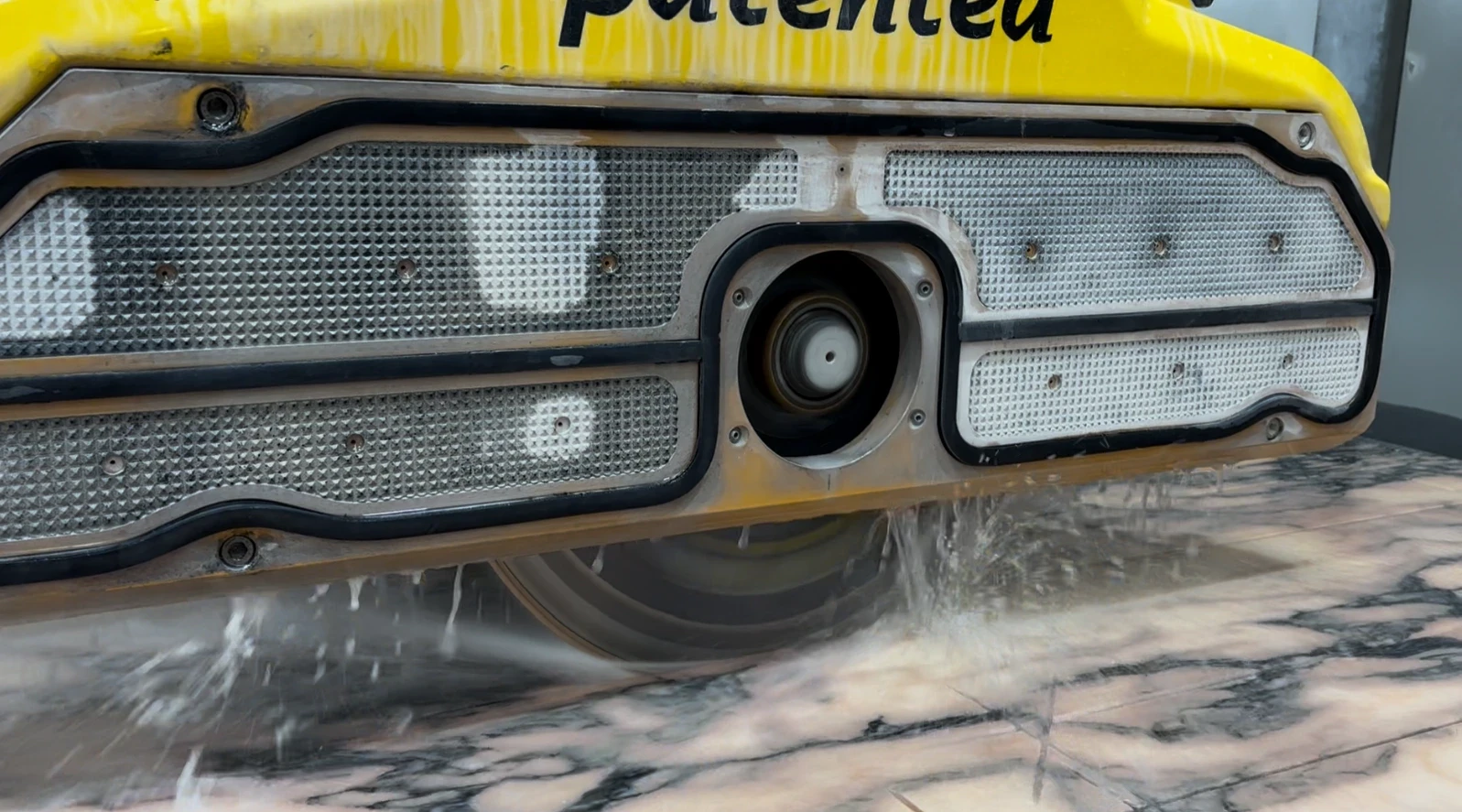
Cut. The bridge saw takes every piece from the slab with a diamond blade under a flood of water, which keeps the blade cool and the dust out of the air.
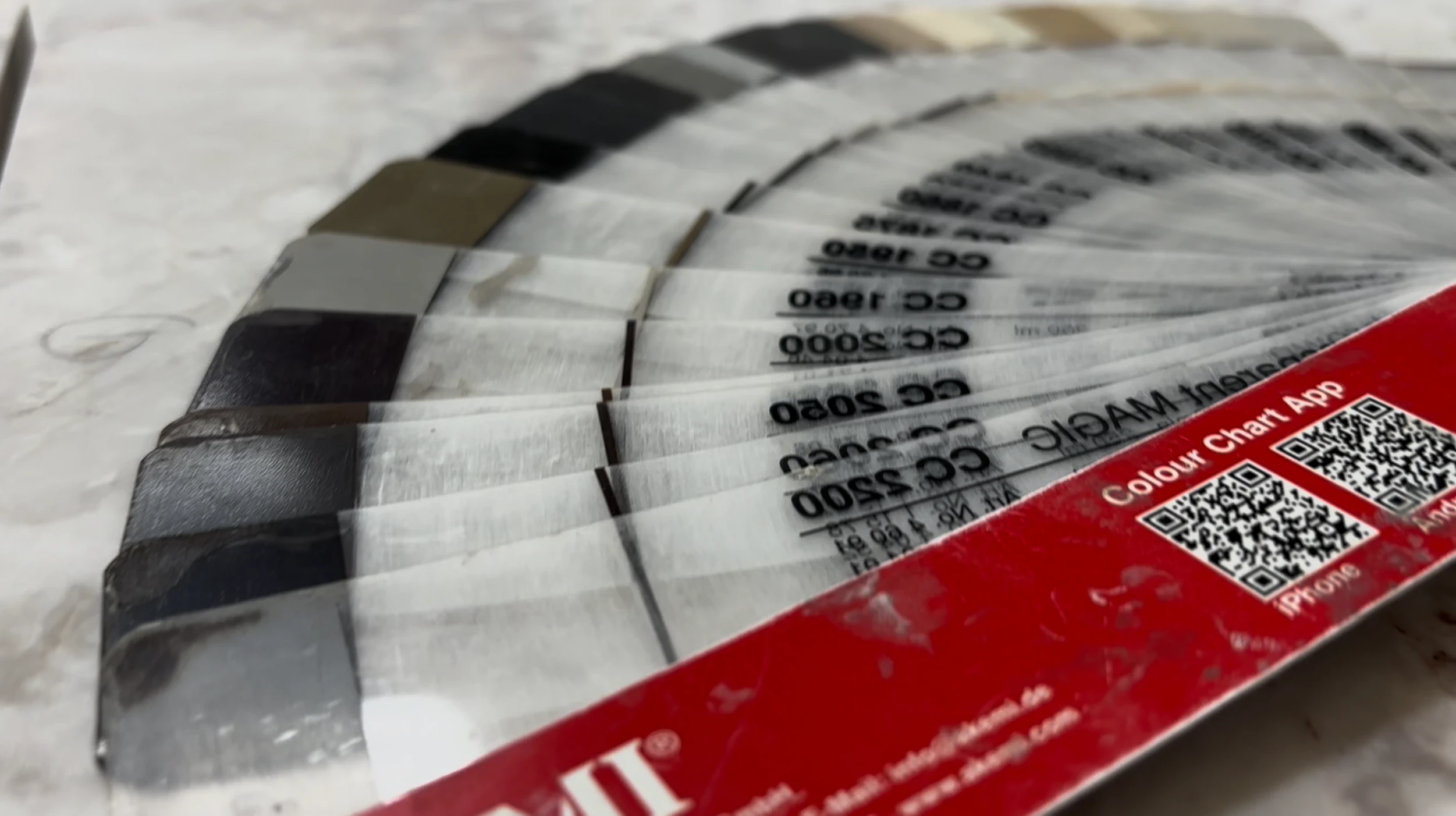

Glue. Stone adhesive comes in dozens of tints, and the one for your bench is matched to your slab from this chart. A join across a long bench, or the strip that builds a 40 mm edge, is glued here before the edge is shaped.
What 20 mm and 40 mm mean on a quote →
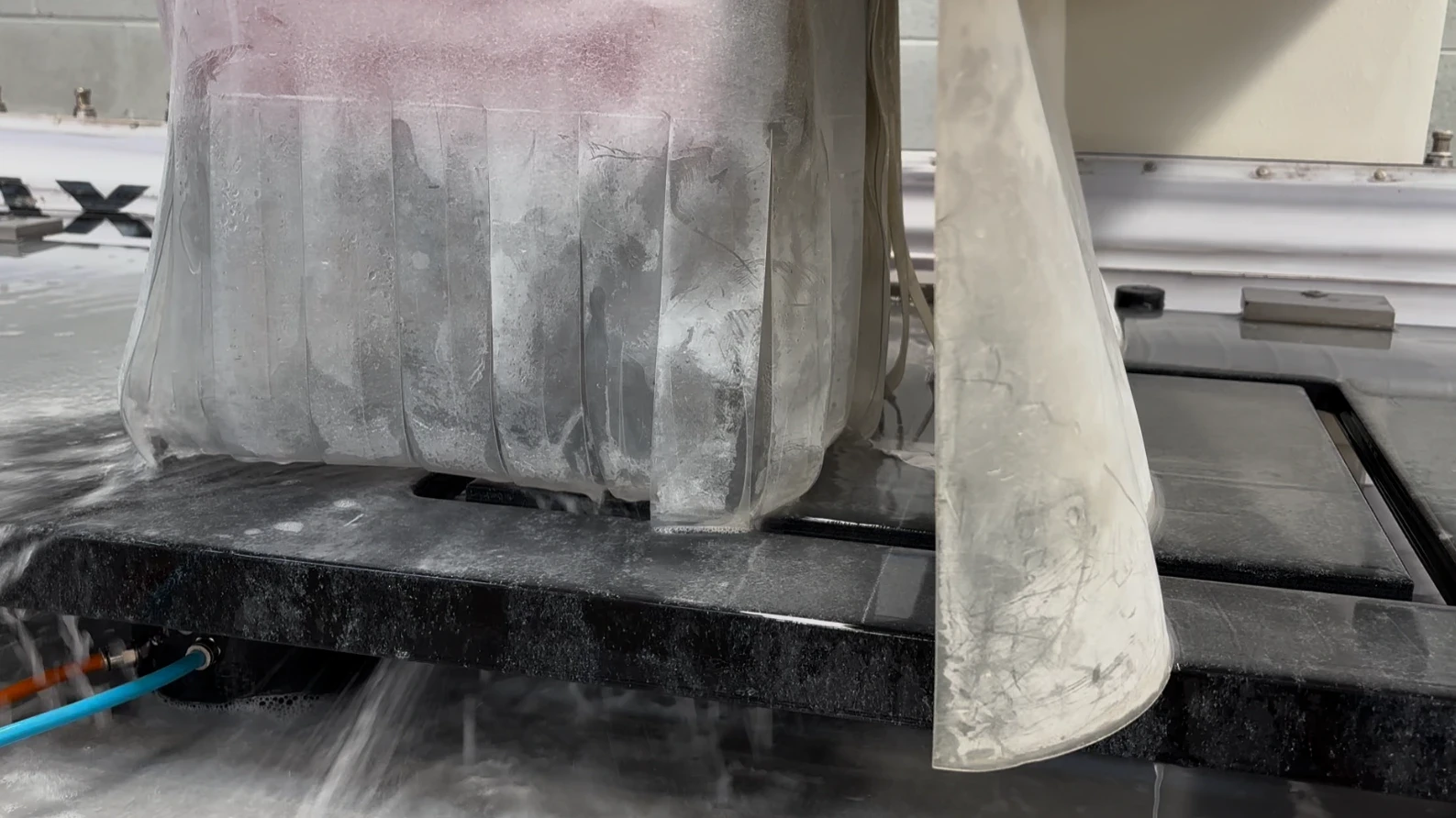
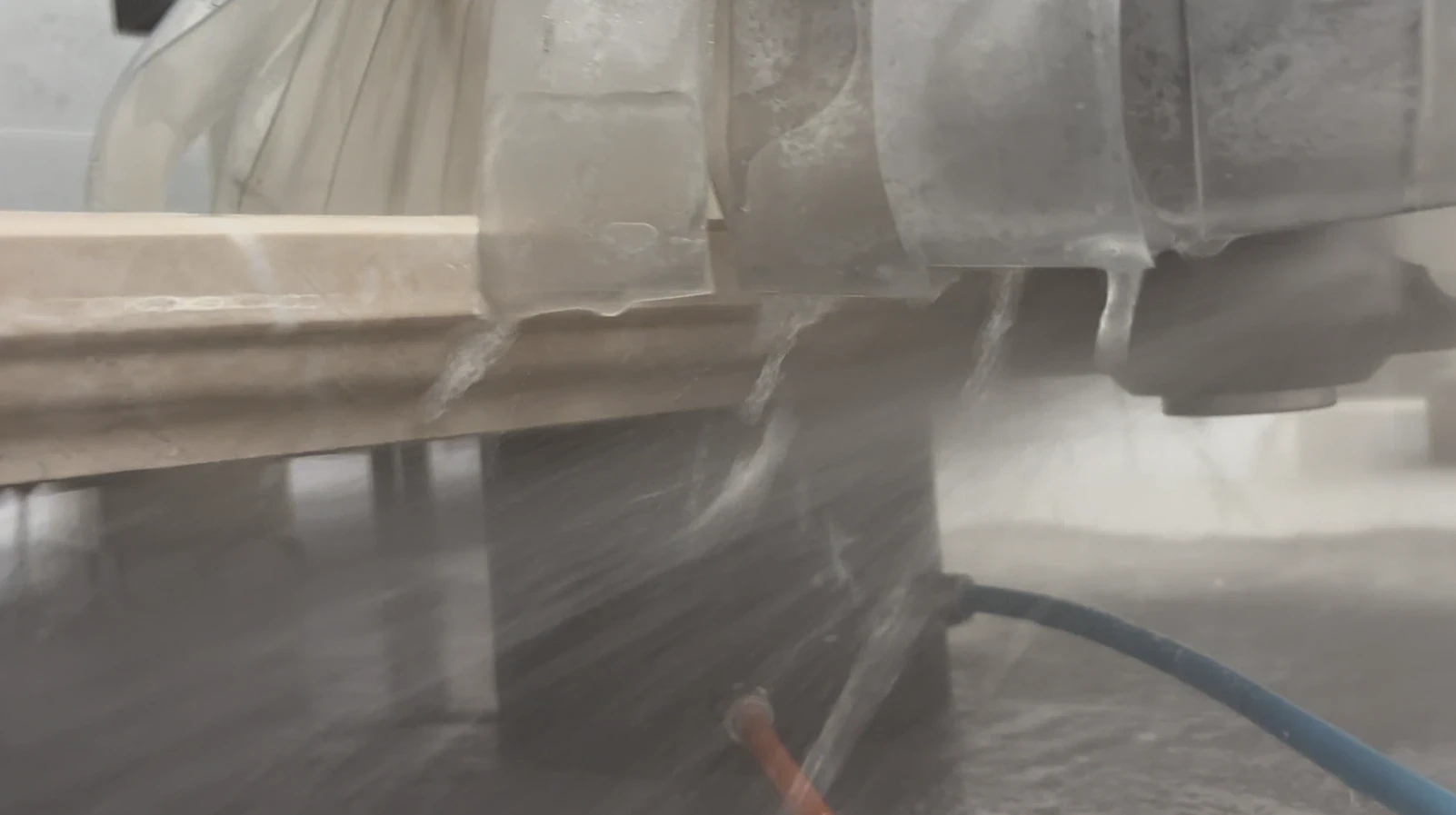
Router. Shaped diamond wheels run along the edge under water and cut the profile you chose. This is where a pencil round, a bullnose or a mitre comes from.
Choose an edge profile in 3D →


Polish. Diamond pads from coarse to fine, worked by hand under water, bring a cut edge up to match the factory face of the slab.
— 03 · Against the others
How each stone behaves on the saw
Every stone goes through the same steps. What changes is the pace and the edge: natural stone takes any profile, porcelain and sintered stone only a square arris or a pencil round.
Natural stone
Real rock, cut straight from a quarried block into slabs. Nothing added. Every slab is unique, so the veins you see on the floor are the veins you get in your kitchen.
In the workshop
Hardness sets the pace. Marble cuts quickly and polishes fast. Granite and quartzite are cut at a measured pace and polished to a deep gloss. All of them take every edge profile we cut, and every one is cut wet.
Where each one differs from natural stone: green is better, red is worse.
Porcelain Large-format porcelain slabs
A large-format ceramic slab, fired from clay and minerals, with the pattern printed on the face. Thin, light and colour-fast.
Sintered stone Smartstone · Dekton · Neolith
Natural minerals pressed and fired into a dense slab with no resin, coloured through the body. Made for heat, sun and hard use.
Reconstituted stone Quartz-look engineered surfaces, zero-silica
Crushed mineral bound in resin and cured into a uniform slab. The same colour and pattern every time. The reconstituted slabs we cut are specified by their manufacturers as containing less than 1% crystalline silica and fall outside the engineered stone prohibition. Safe Work Australia: the engineered stone ban
— 04 · Before you buy
Stone benchtop fabrication questions: joins, thickness, polishing and lead times
01How are stone benchtops made?
The job is measured and drawn, the pieces are laid out on the slab, cut on a bridge saw under water, glued and built up with colour-matched adhesive where needed, edged on a CNC router, polished by hand, then delivered and installed. Every step is done in our Bayswater workshop except the install.
02How are stone benchtops joined?
With a two-part stone adhesive tinted to match your slab, from a chart of dozens of colours. The two pieces are pulled tight with clamps or a seam setter, the excess is cut back and the join is polished flush. Joins are planned on your slab layout so they fall where the veining hides them.
03What is the difference between a 20 mm and a 40 mm benchtop?
The slab is 20 mm. A 40 mm bench is made by mitring a strip of the same slab and gluing it under the front edge, so the face wraps the corner and the bench reads as a solid 40 mm. It costs more in stone and labour, and it is what most people picture when they think of a thick stone bench.
04Can you polish a stone benchtop?
Yes. Natural stone can be honed and re-polished, on site for small marks and in the workshop for a whole top. Porcelain and sintered stone cannot be polished, so their edges stay a square arris or a pencil round, and thicker fronts are mitred.
05How are stone benchtops installed?
The pieces are carried in, set on the cabinets on a bed of silicone, levelled with shims, joined on site if the bench is longer than a slab, and sealed if the stone needs it. A kitchen is usually a day.
06How long does it take to make a stone benchtop?
We aim for ten business days from accepting the quote to install, and we say so up front when a job will take longer, usually because of the stone or the time of year. The cutting itself is a day or two. The rest is the slab arriving, the edge work and the polish.
07Why is stone cut with water?
Water cools the diamond blade, keeps the cut clean and stops dust leaving the stone. Every cut and every edge in our workshop is made wet.
— 05 · Edges, thickness, fluting
Try the parts you can choose
The edge profile, the fluting and the slab layout are the parts of the job that are yours to decide. Each one has a tool on this site, and each one ends in a real quote.